

What is category management in retail? A guide for CPG brands
Category management in retail is the practice of making decisions across a group of related products instead of one product at a time. Retailers and brands use it to improve assortment, pricing, promotions, and shelf placement so the category performs better for the business and works better for shoppers.
That job has become more complex. Shopping behavior can shift quickly, inventory conditions can vary by store, and digital commerce adds another layer of complexity. Traditional review cycles and fixed shelf plans can miss those changes, which is why category management now depends more on timely data and more frequent adjustments across stores and channels.
Key takeaways:
- Category management works best when assortment, pricing, promotions, and placement support the same strategy
- Traditional review cycles can miss changes in demand, availability, and shopper behavior
- The role a category plays for the retailer influences which products get priority, how much space they receive, and where teams look for growth
- Physical and digital shelves need to be managed together so shoppers can find and buy products across channels
- Timely data helps teams respond faster to changes in demand, inventory, and execution
Category management now depends more on timely data and more frequent adjustments across stores and channels to keep up with shopper behavior.
What is retail category management?
Category management in retail is a way to manage a group of related products as a category rather than one item at a time. It helps retailers and brands evaluate category growth, profitability, and shopper needs together so they can make better decisions across the category.
Those decisions include assortment, pricing, promotion, and placement. The goal is to improve category performance while making it easier for shoppers to find and buy the right products.
How does category management work today?
Effective category management in retail goes beyond planning. Success depends on how decisions about assortment, shelf space, pricing, and promotions are carried out.
Retailers may assign different roles to different categories, and those roles shape how decisions are made. Some categories are traffic drivers, some support routine or stock-up purchases, and others are seasonal or higher-margin categories. The distinctions influence which products get priority, how much space the category receives, and where teams look for growth.
Execution puts that strategy into action. It includes choosing the right assortment, allocating shelf space, setting prices, planning promotions, and tracking whether products are available to shoppers in stores and online. Even when a category is positioned for growth, results can fall short if promoted items are out of stock, shelf space does not reflect shopper demand, or product data is incomplete.
Some categories are traffic drivers, some support routine or stock-up purchases, and others are seasonal or higher-margin categories.
Why is category management changing?
Market conditions often change faster than traditional category review cycles allow. Shopper behavior can shift within weeks, inventory conditions can vary by store, promotions can increase demand quickly, and digital shelf performance can change just as fast.
When decisions rely on older snapshots of sales, inventory, and pricing data, teams may be slower to catch execution problems. That can lead to missed sales, out-of-stocks, margin pressure, or poor promotional results.More timely data helps teams spot issues earlier and review category performance more often. For example, if a better-for-you snacking category is a growth priority but store-level data shows repeated out-of-stocks in one region, teams can address the distribution issue before the selling window is lost.
When decisions rely on older snapshots of sales, inventory, and pricing data, teams may be slower to catch execution problems. That can lead to missed sales, out-of-stocks, margin pressure, or poor promotional results.
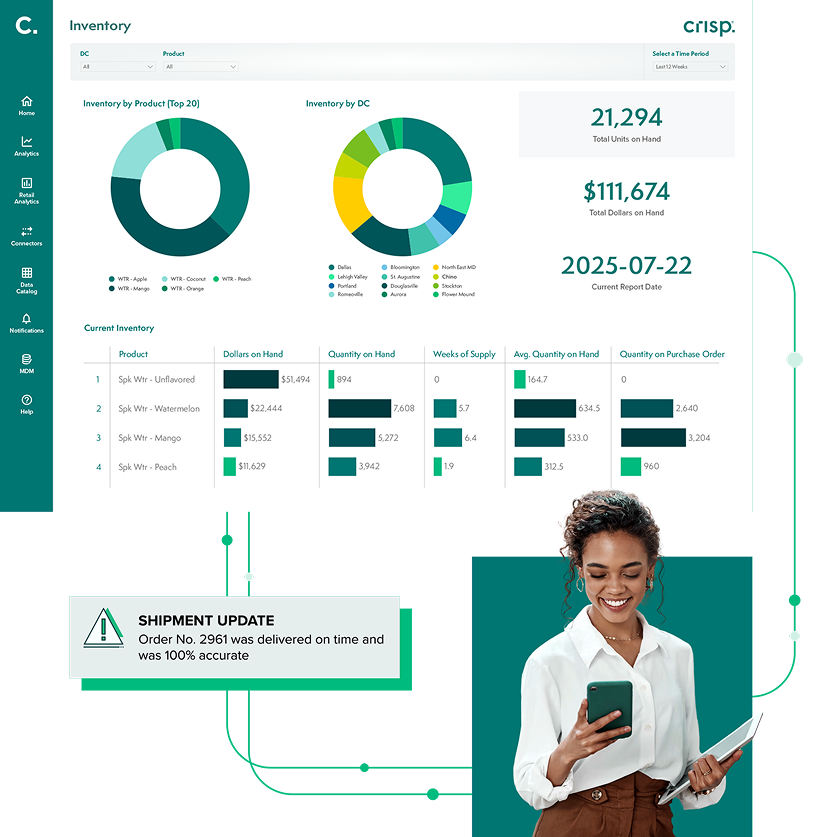
Grow retail revenue with real-time data
How do you build a shopper-centric category structure?
Category teams do not just organize products based on how the business groups them. The category also needs to reflect how shoppers make decisions.
A category decision tree maps the choices shoppers make when buying within a category. The tree shows which factors shoppers consider first, second, and third.
For example, a shopper buying yogurt may first choose between dairy and plant-based options. From there, they may narrow by flavor, pack size, or price. If products are not organized in a way that matches how shoppers think, whether on the shelf or online, shoppers have a harder time finding and comparing options.
The same issue affects both stores and e-commerce. On the physical shelf, poor structure makes products harder to compare and shop. Online, weak categorization and filtering can reduce visibility in search and browse results.
Category teams need to review how products are grouped and organized because shopper priorities can change. During inflation, for example, price or pack size may become a stronger decision factor than brand. Reviewing category structure against current sales data and actual shopping patterns helps align assortment and merchandising with how people actually shop.
How do assortment, space planning, pricing, and promotions connect?
Category management depends on how well assortment, shelf space, pricing, and promotions work together.
When these decisions are made in silos, execution problems are more likely. A strong assortment strategy may not work if products do not fit the shelf, promotions are not supported with enough inventory, or pricing decisions conflict with the promotional plan.
Assortment and space planning
Assortment and space planning are closely connected, but many teams still manage them separately.
Assortment decisions determine which products stay, which leave, and which deserve more support. Space planning determines how those decisions appear on the shelf. If these steps are disconnected, the shelf may not reflect the category strategy.
For example, a retailer may expand a high-growth subcategory, but the planogram may still give too much space to slower-moving items. Or a supplier may recommend an assortment that does not fit store-level constraints.
Assortment decisions determine which products stay, which leave, and which deserve more support. Space planning determines how those decisions appear on the shelf.
Planogram automation
Space planning has often been manual and time-consuming. Teams build and update planograms across many store formats, fixture types, and local assortment differences.
Planogram automation can reduce that burden. When tools generate store-specific shelf sets based on store conditions and fixture limits, teams can spend less time redrawing layouts and more time improving execution.
Shelf planning matters because it affects product visibility, planogram compliance, and how well the shelf supports the category strategy.

Planogram automation for retail execution
Data-driven assortment
Assortment decisions involve tradeoffs. Removing an item may simplify the shelf, but it can also affect shopper choice and category performance.
Category teams need to understand whether an item adds incremental sales or shifts demand from similar products, which is central to assortment optimization. Store-level analysis is important because performance can vary across regions, store sizes, and shopper profiles.
For brands, this changes how shelf space is justified. Showing that a product sells is not enough. A stronger case is that it helps grow the category or meets a specific shopper need.
Pricing and promotion alignment
Pricing and promotions need to work together. When they are planned separately, demand, margin, and execution can fall out of sync.
For example, a promotion may increase demand without enough inventory behind it. A pricing change may also reduce margin or weaken the intended value of a promotion.
Pricing and promotions usually work better when they are planned together, with a clear view of demand, inventory, and store-level readiness.
Strong category management depends on more than shelf planning. Results also depend on product availability, pricing, and how well assortment, promotions, and shelf execution work together at the store level.
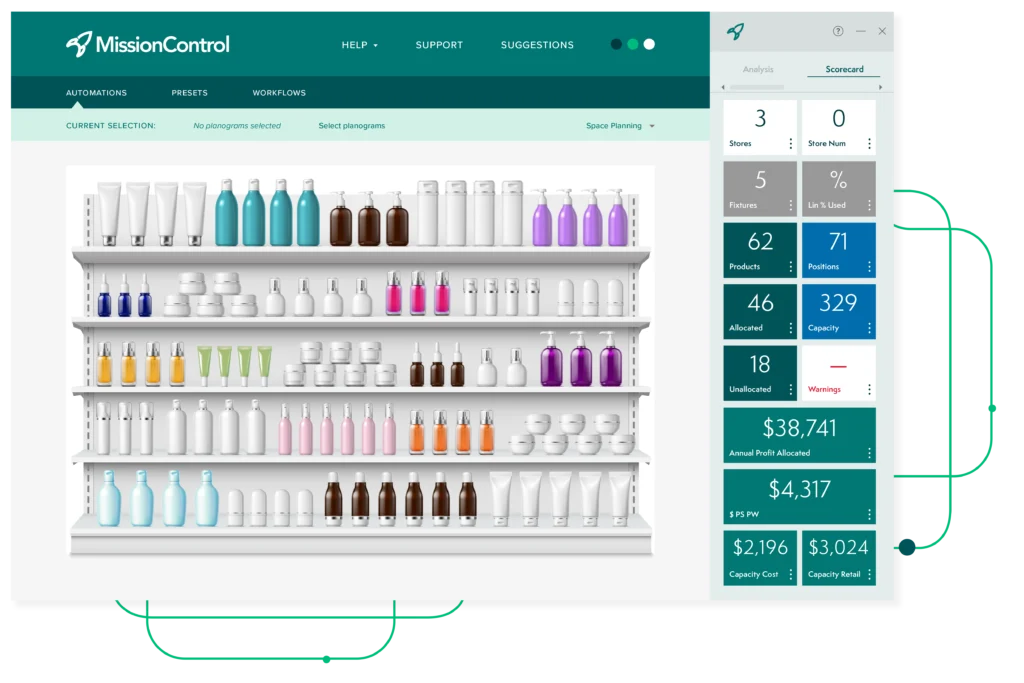
Execute space plans at scale, from approval to in-store reality
The role of the category captain
In some categories, retailers ask a leading supplier to serve as the category captain. The supplier helps analyze the category and recommend assortment, shelf layout, and promotions.
Retailers may value this role because the supplier often brings deeper category knowledge and shopper insights.
Trust is central to the category captain role. Their recommendations need to support the full category, not just one brand. The supplier earns trust by grounding decisions in objective data and clear shopper logic.
The omnichannel retail shelf
A category may be organized clearly in stores but still break down online if product attributes are incomplete, filters are inconsistent, or inventory status is unclear. In digital commerce, that affects product discoverability, not just browsing. It can affect search results, marketplace logic, and AI-assisted shopping experiences that rely on structured product data to surface relevant products.
For example, a shopper looking for a family-size, gluten-free product may use search or filters instead of browsing the full category. If those attributes are missing or inaccurate, the product may not appear where the shopper expects to find it. The same issue can also limit visibility in AI-powered recommendations that depend on detailed product information and context.
Strong category management depends on keeping the physical shelf and digital shelf aligned. Today, the digital shelf needs to make sense not only to shoppers, but also to search systems, marketplace platforms, and AI agents helping guide purchase decisions.
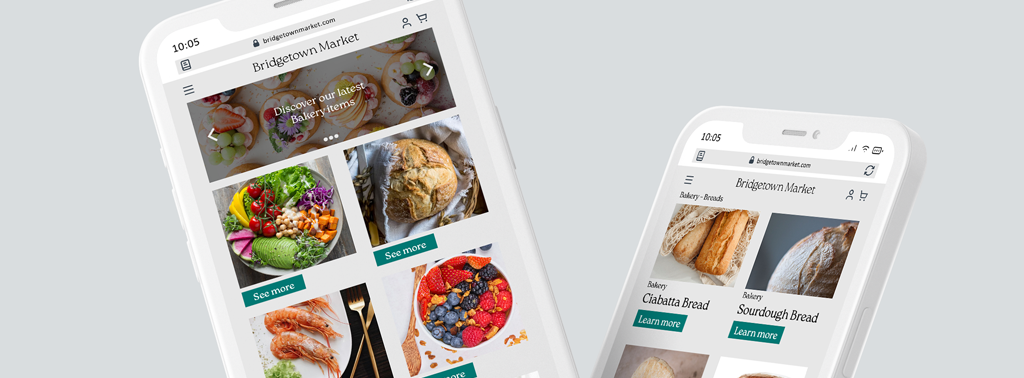
Optimization and analytics for AI-enabled digital commerce
How data and automation improve category management
Category teams can act faster when sales, inventory, pricing, promotions, product attributes, and store-level execution data are connected.
When those signals live in separate systems, teams are slower to spot problems like out-of-stocks, regional demand shifts, or products that are harder to find online.
Automation also reduces manual work in reporting, planogram updates, and combining data from different systems. Teams can then spend more time making decisions and less time preparing data.
AI can also support category teams by helping identify patterns in large datasets and surfacing issues faster.
Automation also reduces manual work in reporting, planogram updates, and combining data from different systems. Teams can then spend more time making decisions and less time preparing data.
Benefits of category management in retail
When category management is done well, it helps retailers and brands improve execution and results across both physical and digital channels.
Key benefits include:
- Better alignment between assortment and shopper demand
- Stronger coordination between pricing and promotions
- More effective use of shelf space
- Better product visibility across channels
- Faster response to changes in sales and inventory
- Clearer visibility into which products are helping grow the category
In practice, strong category management can help reduce out-of-stocks, improve promotional readiness, and make products easier for shoppers to find.
Strong results depend on connected data, coordinated decisions, and the ability to respond as conditions change across stores and channels.
Crisp helps CPG teams bring daily retailer sales and inventory data into one place, making it easier to spot out-of-stocks, phantom inventory, and digital availability issues before they lead to longer periods of lost sales.
FAQs about category management in retail
-
What is the difference between procurement category management and retail category management?
Procurement category management focuses on what a company buys for its own operations. Retail category management focuses on what a retailer sells and how those products are grouped, priced, promoted, and placed.
-
How does AI impact category management?
AI helps teams analyze sales, inventory, pricing, and product data more quickly. Faster analysis can support forecasting, assortment decisions, and less manual work.
-
How often should a category review take place?
Major reviews may still happen annually or seasonally, but category performance should be reviewed more often. Many teams use weekly or monthly reviews supported by more frequent data.
-
What is a category decision tree?
A category decision tree maps how shoppers make choices within a category. The tree shows which factors shoppers consider first, such as product type, flavor, or price.
-
What happens if a category captain prioritizes its own brand?
Trust can weaken, and the relationship becomes less useful to the retailer. Recommendations should support category growth and shopper benefit, not just one brand.
Get insights from your retail data
Crisp connects, normalizes, and analyzes disparate retail data sources, providing CPG brands with up-to-date, actionable insights to grow their business.