
Supercharge CPG sales with AI-powered ...
May 29, 2025
At ICON 2026, AI was everywhere, but the sharpest conversations were about data readiness, not the technology itself. Featuring perspective by our partner, The Clorox Company.
Category teams are still being asked to do more with less. Faster planogram turnarounds. More store-level customization. Elevated collaboration between CPG and retail partners, often with the same headcount and the same manual processes that have been in place for years.
That tension was the undercurrent of conversations at Blue Yonder’s ICON 2026, held May 17–19 in San Diego. The event brought together category management, space planning, and supply chain professionals from across the retail industry, and this year felt like a turning point. Not a conversation about what AI might do eventually. A real reckoning with what it can do now, and whether teams are set up to take advantage of it.
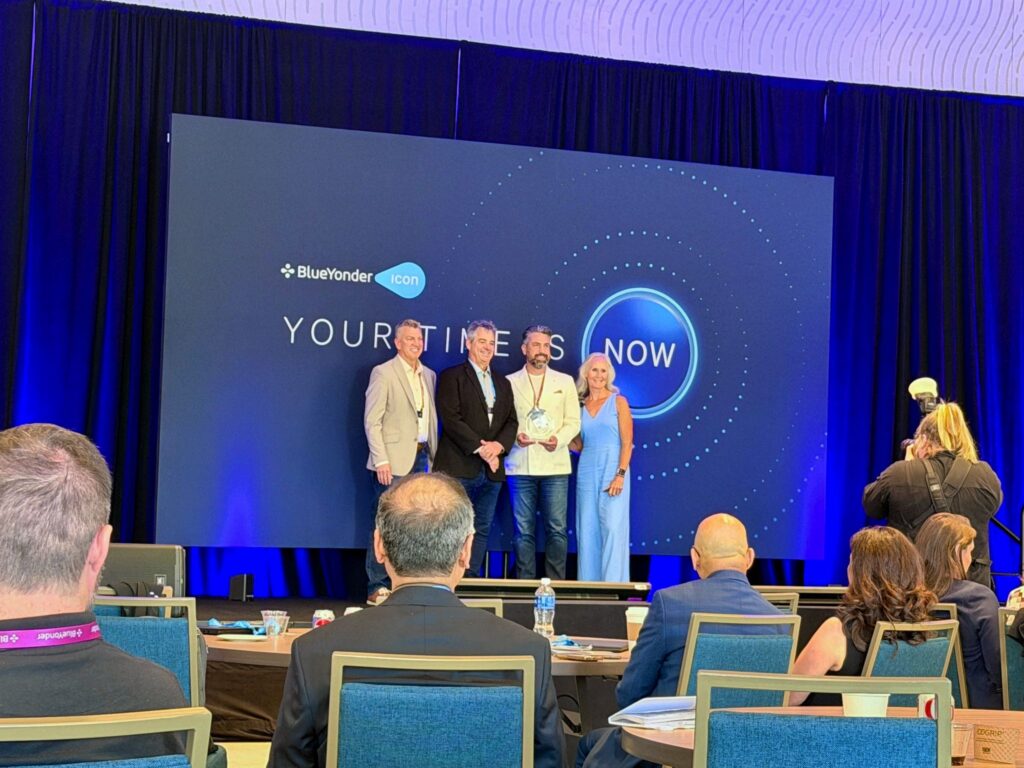
The week kicked off with a milestone for the Crisp team. We were named Blue Yonder’s Category Management Partner of the Year – the first time Blue Yonder has presented this award. It recognizes our work in space planning intelligence and the outcomes we’ve driven for customers inside the Blue Yonder ecosystem.
“Being recognized as Blue Yonder’s Category Management Partner of the Year is a tremendous honor,” said David Formosa, Managing Director, Retailers and Distributors at Crisp. “It reflects the deep expertise our team brings to category and space management and our commitment to developing valuable solutions to help power the Blue Yonder ecosystem.”
We don’t take recognition lightly; this one resonates deeply. The conversations we shared throughout the week reinforced the significance of our work and its impact.
“We’re proud of the work we’ve done to help our customers deliver better outcomes from their investments in Blue Yonder, while making purpose-built solutions accessible across the industry.”
David Formosa, Managing Director, Retailers and Distributors at Crisp
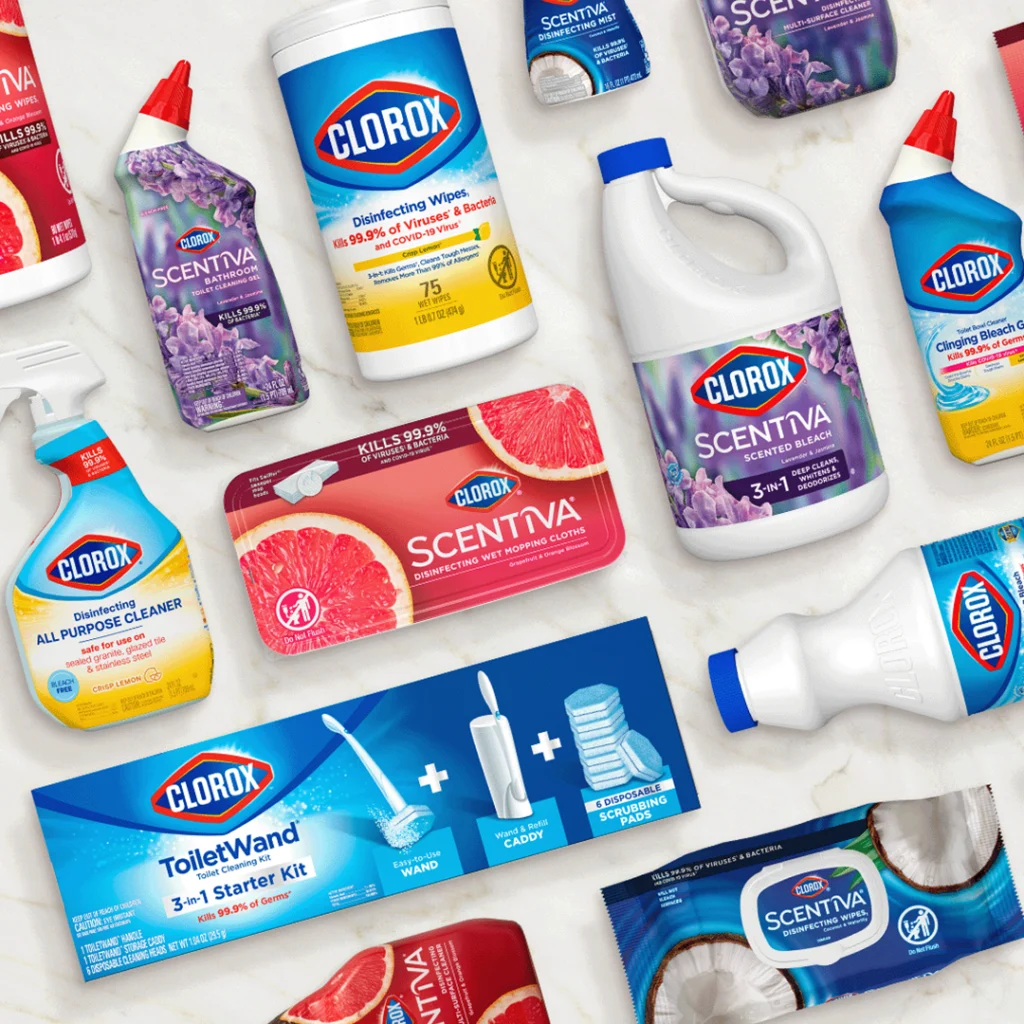
One of the most talked-about sessions at ICON was Crisp’s, featuring our partner The Clorox Company. Eric Liberatore, Capabilities Manager at Clorox, brought a level of credibility to the room with his expansive knowledge and experience in the category space.
Eric’s session, “Tough on Manual Tasks, Easy on Teams,” walked through a real inflection point. Three of Clorox’s categories went from roughly 2,000 planograms to 4,500 in the last year, driven by a need to deliver localized assortments for highly regionalized categories. Average new item counts were climbing. Time from retailers was shrinking. And all automation development ran through Eric and one analyst, which meant a single bottleneck could stall an entire relay.
A solution emerged from the powerful collaboration between Blue Yonder’s Planogram Generator and Crisp MissionControl. Planogram Generator, also known as PG, handles complex merchandising scenarios at scale by automating the creation and maintenance of planograms using a configurable, rules-driven action list. MissionControl takes over repetitive work such as SKU swaps, POG cleanup, and live analysis. Together, they freed category advisors and team subject matter experts to do actual advisory work instead of endless production work.
Across 16 brands, 9 categories, and 14,000 planograms a year, Eric’s results speak for themselves. Feel free to contact us to learn more about the session and how their team achieved a scalable solution quickly.
“With Crisp, we’re seeing 50% to 75% time savings per planogram, and our category advisors are spending that time on strategy instead.”
Eric Liberatore, Capabilities Manager at The Clorox Company
Blue Yonder was direct about where the Category Suite is heading. Space planning is part of the cognitive supply chain roadmap, and the tools teams use today are on a path toward more AI-driven decision-making and deeper integration across the supply chain. That’s genuinely exciting. It also raises a question most teams haven’t fully answered: Is your data ready?
If your planogram data is fragmented, your product attribution is inconsistent, or your team is spending more time building outputs than acting on insights, those gaps will get harder to work around as the platform evolves. Based on the conversations we had, and what we see in the market, it’s possible that most Retailers and CPGs are facing these difficulties, and becoming aware of the importance of their brand’s data readiness.

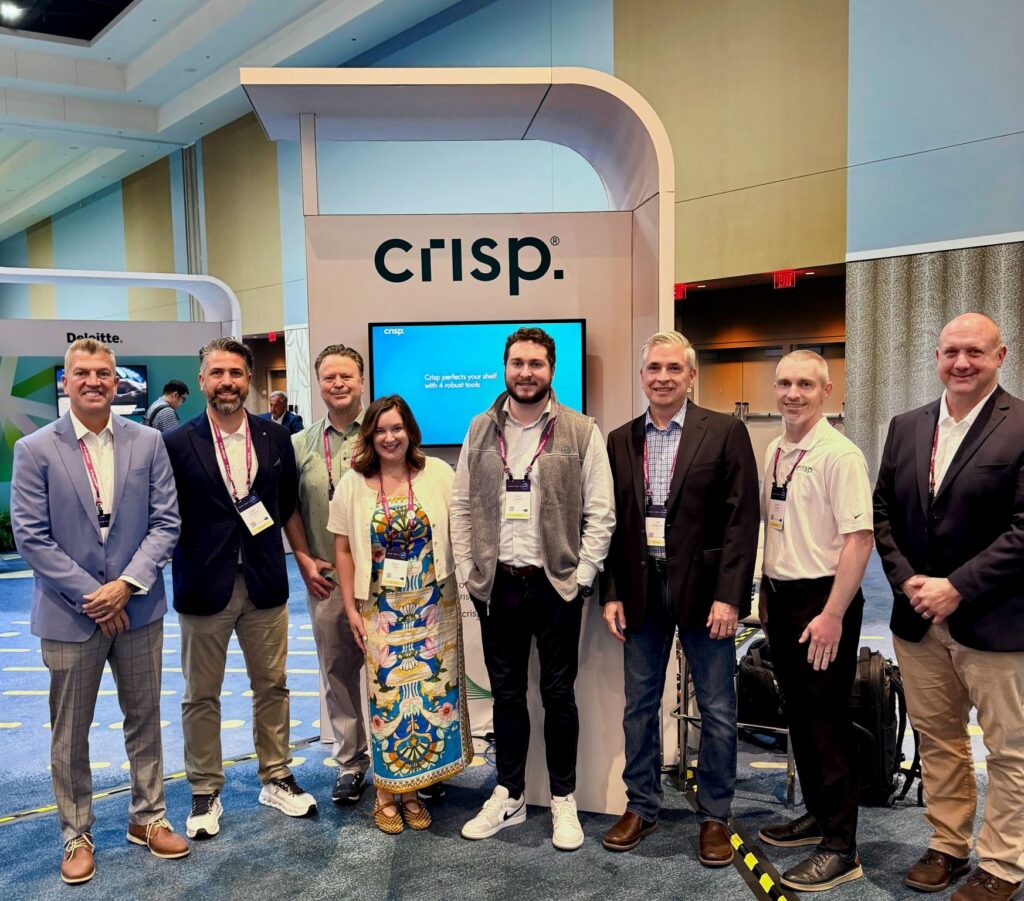
Our team spent three days on-site in back-to-back conversations with retail, CPG, brokers and distributor teams from across the industry. A few themes consistently came up:
Floor planning is a pressure point for many. Retailers are managing floor plan work across hundreds or thousands of stores and formats. CPG teams are increasingly being asked by their retail partners to contribute to floor planning, not just planogram management. The tools and workflows most teams are using weren’t built for this volume or complexity. This came up in nearly every conversation, regardless of segment.
Time is still the real constraint. When we asked how long it takes to run a reset analysis, build a category review deck, or update planograms, the answers were consistent. Two days. Half a week. A full sprint. The Clorox session landed so strongly because it put a real number on the problem and showed what happens when you get that time back.
The AI conversation is everywhere, but the skepticism is too. Most teams have heard the AI pitch. What they’re asking now is whether these solutions actually understand retail data, planogram structures, and how category teams work. Vertical AI built for retail, grounded in accurate, traceable data from more than 7,000 brands, retailers, and distributors, is a different conversation entirely. When teams saw what that looks like in practice, the reactions were immediate.
When we asked how long it takes to run a reset analysis, build a category review deck, or update planograms, the answers were consistent. Two days. Half a week. A full sprint. The Clorox session landed so strongly because it put a real number on the problem and showed what happens when you get that time back.
The conversations at ICON pointed to something bigger than efficiency gains. What we kept hearing was a desire to move from reactive to proactive – from updating plans when something breaks to having a system that surfaces when a plan needs to change, before it affects performance.
That’s the thinking behind Crisp’s Space Intelligence framework. Space planning has gone through two meaningful shifts already: first, digitization moved planograms from paper to software. Then, automation gave teams the ability to manage thousands of stores consistently at scale. The third shift is generative.
Instead of starting with a blank planogram and building manually, a generative system produces the first pass, informed by merchandising rules, velocity patterns, and physical constraints. The planner’s role shifts from construction to evaluation and refinement. Validation is embedded in the workflow, not bolted on at the end. After deployment, the system keeps monitoring performance signals and surfaces when allocation and demand are drifting apart.
The question stops being “how do we help planners work faster?” and starts being “how does the system generate, validate, and improve the plan before a user even begins editing?”
ICON 2026 reinforced something we already believed: the category management teams investing in their data foundation now are building a structural advantage that will compound as the Blue Yonder platform and the broader industry evolves around them. It’s easy to get caught up in what’s next and lose sight of what’s right in front of you. The teams that get the most out of Blue Yonder’s evolving platform are the ones asking the right questions now:
At Crisp, we start by understanding where your team is today. That’s why we focus on:
Whether you’re modernizing legacy tools, already on Blue Yonder’s cloud platform, or starting to explore what Cognitive really means for your team, we’re here to help you build the path forward one step at a time. Secure your vision of retail excellence by learning more about Crisp solutions for space planning automation and intelligence. Or book time to speak with an expert today.