

UNFI data operations guide for CPGs
How to use UNFI Insights data to grow your distribution
UNFI is the largest publicly traded grocery wholesaler in North America, serving more than 30,000 retail locations across the US and Canada. For the thousands of CPG brands that sell through UNFI, distribution data isn’t optional – it’s the daily operating system for managing sales, inventory, and supply chain performance across the network.
UNFI Insights powered by Crisp is the data platform built for this purpose. It delivers daily sales, inventory, distribution, fill rate, and chargeback data through interactive dashboards – giving suppliers the visibility they need to act on their business, not just report on it. And with the recent introduction of AI Agents, Projected Orders, and Scheduled Reports, the platform is moving from reporting to intelligence.
This guide covers the data available through UNFI Insights, the use cases that drive real results, and how the latest capabilities are changing the way suppliers manage their UNFI business.
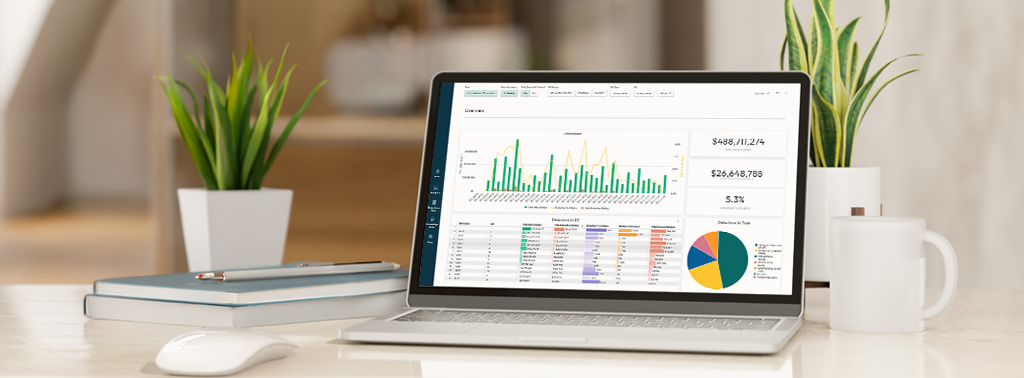
UNFI Insights is leveling up with AI Agents and more
UNFI Insights powered by Crisp delivers daily sales, inventory, distribution, fill rate, and chargeback data through interactive dashboards – giving suppliers the visibility they need to act on their business, not just report on it. And with the recent introduction of AI Agents, Projected Orders, and Scheduled Reports, the platform is moving from reporting to intelligence.
What data is available through UNFI Insights?
UNFI Insights goes beyond the basic reporting available through myUNFI, delivering interactive dashboards across several core data sets:
Sales and Velocity – Daily sales data at the DC, SKU, and store level, including year-over-year comparisons and comp sales. This is the foundation for tracking what’s selling, measuring sales velocity, and building the growth narrative that buyers want to see.
DC Inventory – On-hand inventory at each distribution center, connected to shipments moving through UNFI’s network. This is how suppliers spot when a DC is running low and take action before products go out of stock. Nestlé Purina’s supply chain team uses this data to manage a 1,500 SKU portfolio and keep products on shelf.
Distribution – Points of distribution data showing which DCs and retail locations carry your products, and how distribution is expanding or contracting over time. Samyang America used this data to measure performance after launching 15 new SKUs through UNFI, identifying sales opportunities within the store sales reports.
Chargebacks and Trade Spend – A deductions management platform that automatically pulls in backup documentation and helps brands categorize and dispute chargebacks. This is critical for controlling trade spend and protecting margins.
Fill Rate – The percentage of product that shipped versus what was ordered, measured across UNFI’s DC network. Monitoring fill rate helps suppliers identify fulfillment issues before they affect on-shelf availability and buyer confidence.
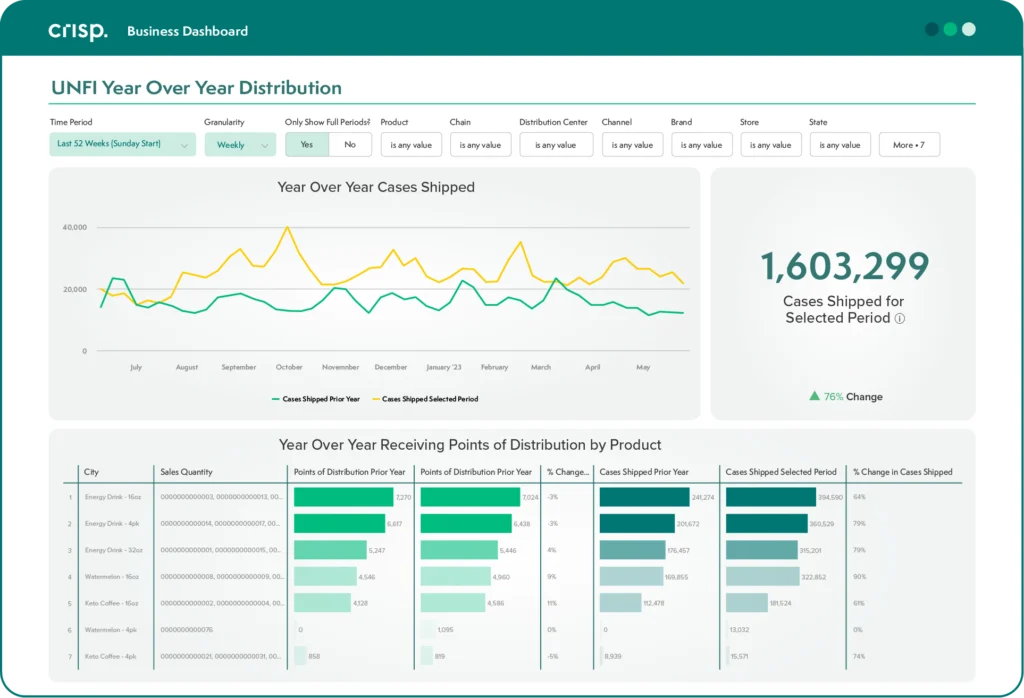
On-hand inventory at each distribution center, connected to shipments moving through UNFI’s network. This is how suppliers spot when a DC is running low and take action before products go out of stock. Nestlé Purina’s supply chain team uses this data to manage a 1,500 SKU portfolio and keep products on shelf.
How suppliers use UNFI data to diagnose regional performance
UNFI’s network spans the entire US and Canada, with two product-centered divisions – natural and conventional – each serving different retail segments. For suppliers, this means performance can vary widely by region, division, and retailer.
The most effective UNFI suppliers don’t look at topline numbers alone. They dig into regional performance to understand where products are strongest, where growth is stalling, and where there’s untapped opportunity. This kind of analysis helps teams decide where to push for new distribution, where to invest in promotions, and where to focus field sales efforts.
Chosen Foods used UNFI Insights to fuel 35% year-over-year sales growth in natural and conventional channels. The data revealed standout results at specific retailers – Stop and Shop surged 212%, Giant Foods grew 70%, and Harris Teeter rose 44% – insights that the team used to double down on winning accounts and bring data-driven proposals to buyer conversations.
The same approach works for assortment optimization. By analyzing which SKUs perform best in which regions, suppliers can recommend targeted assortments for specific retailers rather than a one-size-fits-all approach.
Case studies: Real UNFI Insights ROI

Safe Catch
Recovered $1M in stockouts

Nature’s Bakery
Triple-digit retailer growth
Chosen Foods
Eliminated spoilage throughout supply chain
Nestlé
Manages 1,500 SKU portfolio
How suppliers use UNFI data to manage inventory and prevent waste
Daily DC inventory data is one of the most operationally valuable pieces of UNFI Insights. It lets suppliers see what’s on hand at each distribution center, connected to what’s moving through the supply chain.
For brands in perishable categories, this matters especially. Over-ordering ties up capital and risks spoilage. Under-ordering leads to out-of-stocks and voids that erode distribution. Getting it right requires daily visibility, not monthly reports.
Chosen Foods effectively eliminated spoilage throughout their UNFI supply chain by using daily insights to right-size inventory. “We’ve accelerated growth while effectively eliminating waste in our distribution supply chain thanks to Crisp,” says Tiana Ukleja. The team uses UNFI Insights to make confident decisions about production and ordering – informed by what’s actually happening in UNFI’s DCs, not last month’s spreadsheet.
Nestlé Purina’s supply chain manager, Taylor Johnson, describes the shift: “When a pet’s favorite food isn’t on the shelf, it really makes a difference. Using these insights builds trust that our products are there, on time, for the shoppers and pets who count on them.” Going from limited visibility to daily, store-level data changed how the team spots and resolves supply chain gaps.
“When a pet’s favorite food isn’t on the shelf, it really makes a difference. Using these insights builds trust that our products are there, on time, for the shoppers and pets who count on them.”
Taylor Johnson, Supply Chain Manager, Nestlé Purina
How suppliers use UNFI data to track promotions and seasonal performance
Trade spend is one of the largest line items in a CPG supplier’s budget, and understanding whether promotions are actually working is critical. UNFI Insights gives suppliers the data to evaluate promotional performance at the store and DC level – not just whether a promotion ran, but whether it moved product and at what cost.
Kimberly-Clark uses UNFI Insights to “monitor our business through busy seasons like Back-To-School and Cough, Cold, and Flu, to see how promotions are performing and ensure we’re executing in stores,” says Tom Fletcher, Customer Business Partner. For brands like Kleenex and Kotex, seasonal performance data is essential for demand planning and for making the case to buyers for continued promotional support.
The chargebacks dashboard adds another layer. By categorizing deductions automatically and connecting them to sales data, suppliers can evaluate whether their trade spend is generating a positive return. Understanding chargebacks as a percentage of sales helps teams focus on the promotions that drive real lift and cut the ones that don’t.
For suppliers with a formal S&OP process, UNFI Insights data feeds directly into demand forecasting and production planning for upcoming seasonal peaks, promotional campaigns, and new product launches.
Kimberly-Clark uses UNFI Insights to “monitor our business through busy seasons like Back-To-School and Cough, Cold, and Flu, to see how promotions are performing and ensure we’re executing in stores,” says Tom Fletcher, Customer Business Partner.
What’s new: AI Agents, Projected Orders, and Scheduled Reports
UNFI Insights powered by Crisp has expanded with three new capabilities, available to all natural and conventional suppliers in Fal 2026.
AI Agents – Built on Crisp’s retail-grade data platform, AI Agents allow UNFI suppliers to ask questions about their business in plain English and get data-driven answers in minutes. Every number traces back to source data, and users can create and share custom graphs and presentations around the KPIs that matter most.
Clorox uses UNFI AI Agents for localized assortment planning, especially during seasonal peaks. “AI Agents will be a real asset for holiday planning and execution,” says Steve Bruton, Business Account Manager at Crossmark. “For seasonal performers like Burt’s Bees, we can propose strategic assortments based on localized insights, then see what’s working in real time as demand spikes.”
B&G Foods uses AI Agents to diagnose why brands underperform in specific regions, build customer-ready presentations in minutes, and surface smarter promotional opportunities. “Crisp AI Agents has saved hours out of my workday,” says Allie Schmidt, Customer Sales Manager. “It can provide answers and identify solutions in minutes that otherwise can take hours to pull together on my own.”
Projected Orders – A forward-looking view of what UNFI expects to order and when – weeks ahead of the purchase order. This gives suppliers time to build that demand into their own production and inventory planning, rather than reacting after the PO arrives.
Scheduled Reports – Automates delivery of the custom reports suppliers use most. Set up a Monday morning summary, a weekly distribution snapshot, or a daily inventory alert – and stop logging in to pull the same reports manually.
“We’ve seen incredible adoption of UNFI Insights across our entire distribution network,” shared Meagan Kessel, SVP of Supplier Services at UNFI. “Suppliers are using it every day to make smarter decisions that result in top-line business wins.”
For suppliers who want to learn tips and tricks for the platform, UNFI and Crisp offer a Learning Academy with guided sessions.
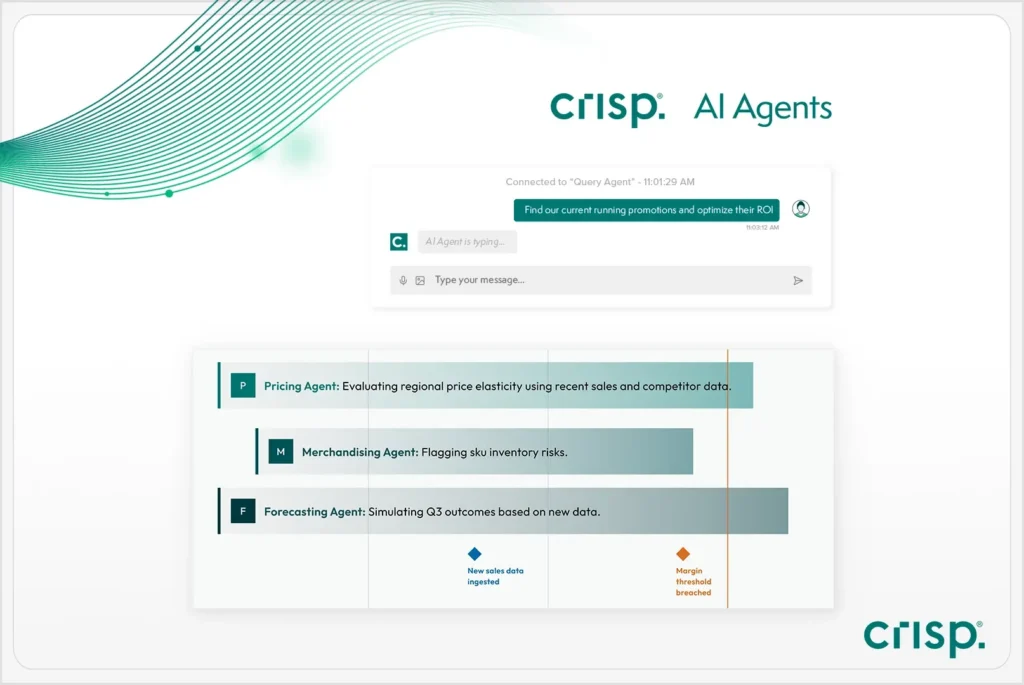
Discover Crisp AI Agents for Retail
“Crisp AI Agents has saved hours out of my workday. It can provide answers and identify solutions in minutes that otherwise can take hours to pull together on my own.”
Allie Schmidt, Customer Sales Manager, B&G Foods
Connecting UNFI data to the rest of your retail business
Most CPG brands don’t sell exclusively through UNFI. They also sell through KeHE, through direct retail accounts, and through e-commerce. When distribution data lives in separate portals for each partner, it creates silos that slow down decision-making and make cross-channel analysis difficult.
Crisp’s data platform connects to 40+ retailers and distributors, normalizing data into a consistent structure so suppliers can compare performance across UNFI, KeHE, and their retail accounts in one place. Data flows into Crisp dashboards or through to BI tools and cloud platforms like Power BI, Excel, Snowflake, and Databricks.
For brands managing product data across multiple channels, Crisp AI Master Data standardizes product attributes, classifications, and hierarchies – so the same product isn’t classified differently across UNFI, KeHE, and retail. Clean, consistent master data means category management conversations are grounded in accurate numbers, not data reconciliation.
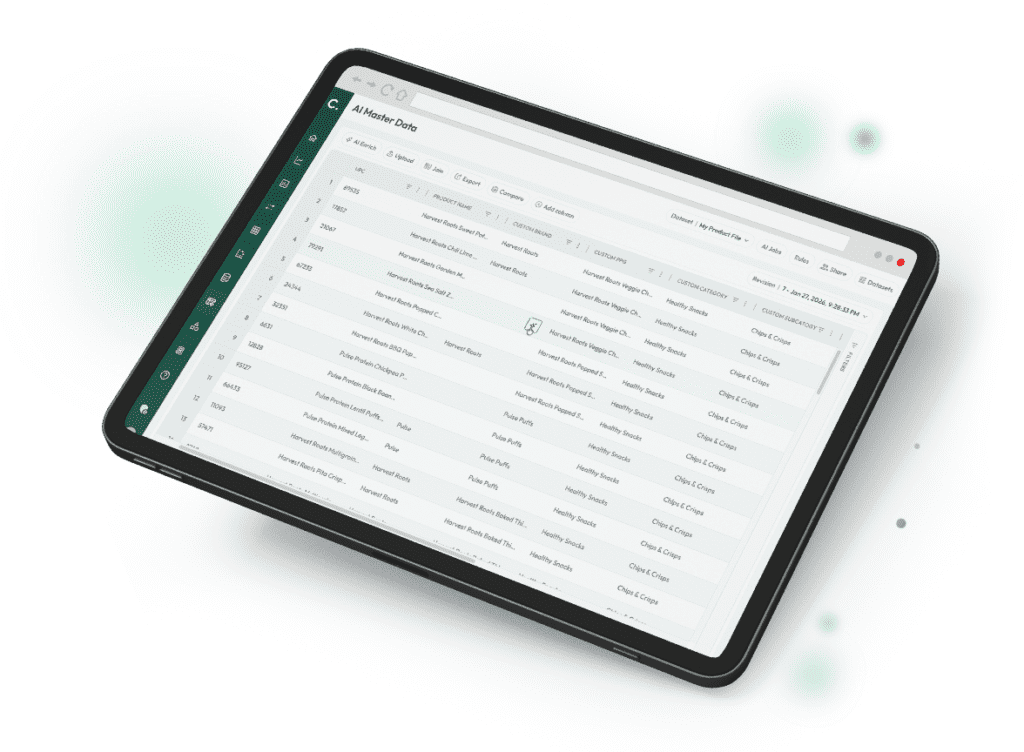
Experience Crisp AI Master Data for CPG and Retail
Getting more from your UNFI partnership with data
The UNFI suppliers who grow fastest are the ones who use their data daily – not as a quarterly check-in, but as the operating system for their distribution business. They track velocity by region. They monitor DC inventory in real time. They catch fill rate issues before they cost them shelf space. And they walk into buyer meetings with data that shows exactly where they’re winning and where they need support.
With UNFI Insights powered by Crisp – and with AI Agents now expanding to all suppliers – getting those answers is faster than ever. For brands looking to expand beyond UNFI into additional retail channels, speak with a Crisp expert to learn more.
Get insights from your retail data
Crisp connects, normalizes, and analyzes disparate retail data sources, providing CPG brands with up-to-date, actionable insights to grow their business.